Leadership Is Misaligned
Executives disagree about priorities, authority, decision rights or how the combined organization should operate.
Winning Pathway® helps organizations navigate the people, leadership and cultural challenges of mergers, acquisitions, post-merger integration, restructuring and divestitures. Using Project SPICES™ with Re+Calibration™, we identify the human and organizational patterns slowing integration, weakening trust, disrupting decision-making and putting performance at risk.
Organizations do not merge independently of the people inside them. Leaders and employees bring values, assumptions, communication habits, conflict styles, responses to pressure, expectations about authority and established ways of working into the combined organization.
Those patterns can become organizationally consequential. Defensiveness can suppress information. Control can slow decisions. Conflict avoidance can weaken accountability. Distrust can create silos. Leadership behavior that is repeatedly reinforced can eventually become part of the culture.
What begins as individual behavior can become a relational pattern. What repeats across teams can become an organizational norm. What becomes normalized can shape culture, execution and performance.
Post-merger integration problems often show up first as leadership friction, cultural resistance, slower decisions, declining trust or stalled performance. These are not always separate issues. They may be connected signals of a larger human and organizational misalignment.
Executives disagree about priorities, authority, decision rights or how the combined organization should operate.
Legacy norms, identities and ways of working are creating friction, resistance or “us versus them” behavior.
Unclear ownership, duplicated authority and escalating approvals are interfering with execution.
Employees filter information, protect territory, withdraw or question leadership’s intentions.
Uncertainty, identity loss and leadership friction threaten engagement and retention of critical people.
The transaction closed, but integration friction is delaying synergies, performance improvement or strategic execution.
These problems are often treated separately. Winning Pathway® examines how they interact as one human and organizational system.
Project SPICES™ provides the foundational human-alignment framework behind Winning Pathway's organizational work. It helps us examine how individual patterns, values, responses to pressure and ways of relating influence relationships, leadership behavior and larger organizational systems.
Re+Calibration™ is the applied process. Within mergers, acquisitions and divestitures, it helps identify where alignment has been disrupted across people, leadership, relationships, culture and systems—and what must change to restore effective execution.
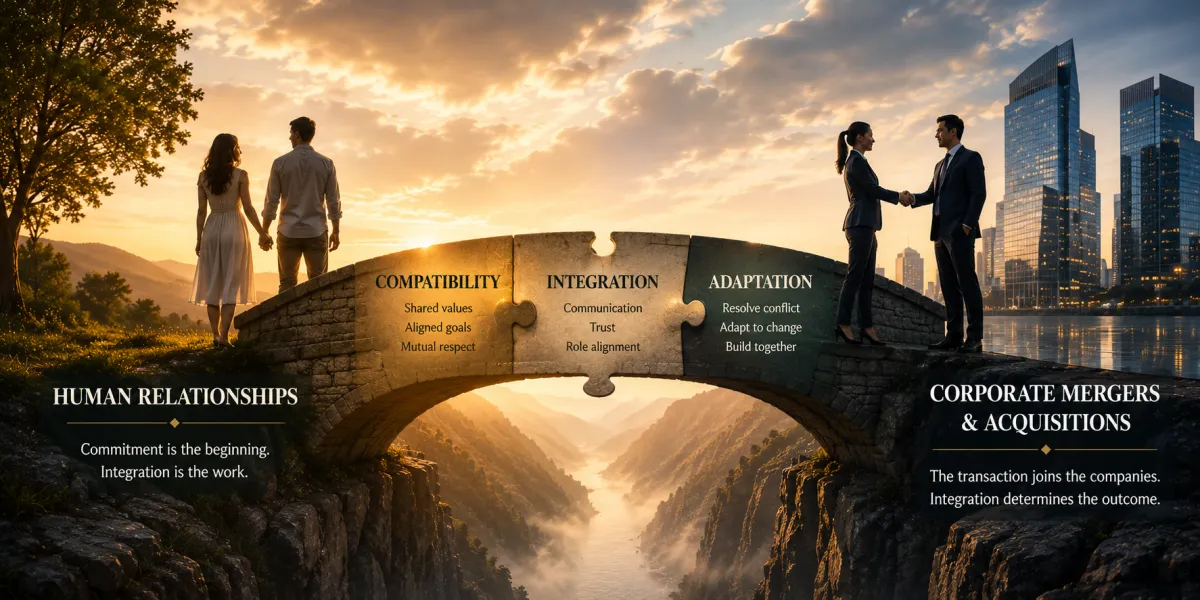
A marriage is not a merger, and a person is not a corporate asset. The institutions carry fundamentally different emotional, ethical, legal and economic consequences.
Yet at a systems level, they present a provocative parallel.
Both begin with selection. Both involve expectations about compatibility. Both require previously independent parties to negotiate roles, resources, authority, identity and shared expectations. Both encounter conflict and unexpected change. Both require adaptation. Some become stronger through integration and repair. Others eventually determine that separation is the more viable path.
Organizations do not acquire values, conflict patterns, trust, defensiveness, avoidance or adaptability independently of the people within them.
Individuals enter relationships. Relationships form groups and teams. Repeated interactions create expectations. Leadership and systems reinforce some behaviors while discouraging others. What becomes repeatedly accepted, rewarded, avoided or tolerated can eventually become normalized—and what is normalized becomes part of culture.
This is the systems continuum at the foundation of Project SPICES™.
Re+Calibration™ is the applied process for examining where alignment has been disrupted and what must change across people, relationships, leadership, systems and culture.
Within Winning Pathway®, this perspective becomes particularly relevant during mergers, acquisitions, restructuring and organizational transformation because integration requires more than combining assets, systems and reporting structures. It requires human beings to renegotiate identity, authority, expectations, relationships and ways of working.
The transaction may create the organization on paper. Human integration determines what organization actually emerges.
Research snapshot
National relationship data and long-term corporate-divestiture research describe different populations and use different methodologies. They should not be combined into one universal failure rate. Considered responsibly, however, the findings raise important questions about selection, compatibility, integration, adaptation and delayed separation.

The right questions at each stage increase the probability of successful integration and help leaders determine when repair, restructuring or separation creates greater long-term value.
The systems parallel
The comparison is strongest when it focuses on the work required to turn separate parties into a functioning shared system. Human relationships and corporate combinations both move through stages of selection, discovery, commitment, integration, conflict, adaptation and decisions about whether to continue or separate.

Commitment creates the formal relationship. Integration determines how the relationship functions under real conditions.
The corporate-divorce journey
Every acquisition begins with expectations about synergy, growth, efficiency or strategic advantage. The outcome depends on how successfully the combined organization integrates communication, culture, systems, leadership, trust and relationships.

Strategic leadership requires the discipline to strengthen what is repairable, restructure what is misaligned and separate when remaining together no longer creates greater value.
Marriage and corporate M&A are not equivalent institutions. This comparison concerns systems dynamics rather than institutional equivalence. The statistics come from different populations, methodologies and denominators and should not be numerically compared as though they measure the same phenomenon.
The analytical value lies in examining recurring questions involving selection, compatibility, commitment, integration, authority, conflict, adaptation, repair and separation.
How Winning Pathway applies the research
Winning Pathway helps leaders examine the human and organizational systems through which transaction value is realized or eroded. Using Project SPICES™ with Re+Calibration™, we identify recurring patterns affecting leadership, trust, communication, culture, decision rights, employee adaptation and execution.
Assess leadership expectations, cultural patterns, decision rights, accountability, communication and foreseeable sources of friction.
Identify recurring conflict, information distortion, role ambiguity, identity threat, employee withdrawal and executive-team misalignment.
Establish objective evidence, clarify the costs of continuation and reduce the influence of ego, reputation and sunk costs on judgment.
Distinguish temporary integration strain from structural incompatibility, repairable conflict from entrenched dysfunction and necessary adaptation from value-destroying delay.
MERGERS • ACQUISITIONS • INTEGRATION • DIVESTITURES
Winning Pathway® is connected to ongoing work examining organizational misalignment, integration, leadership pressure, human systems, and performance under complexity.
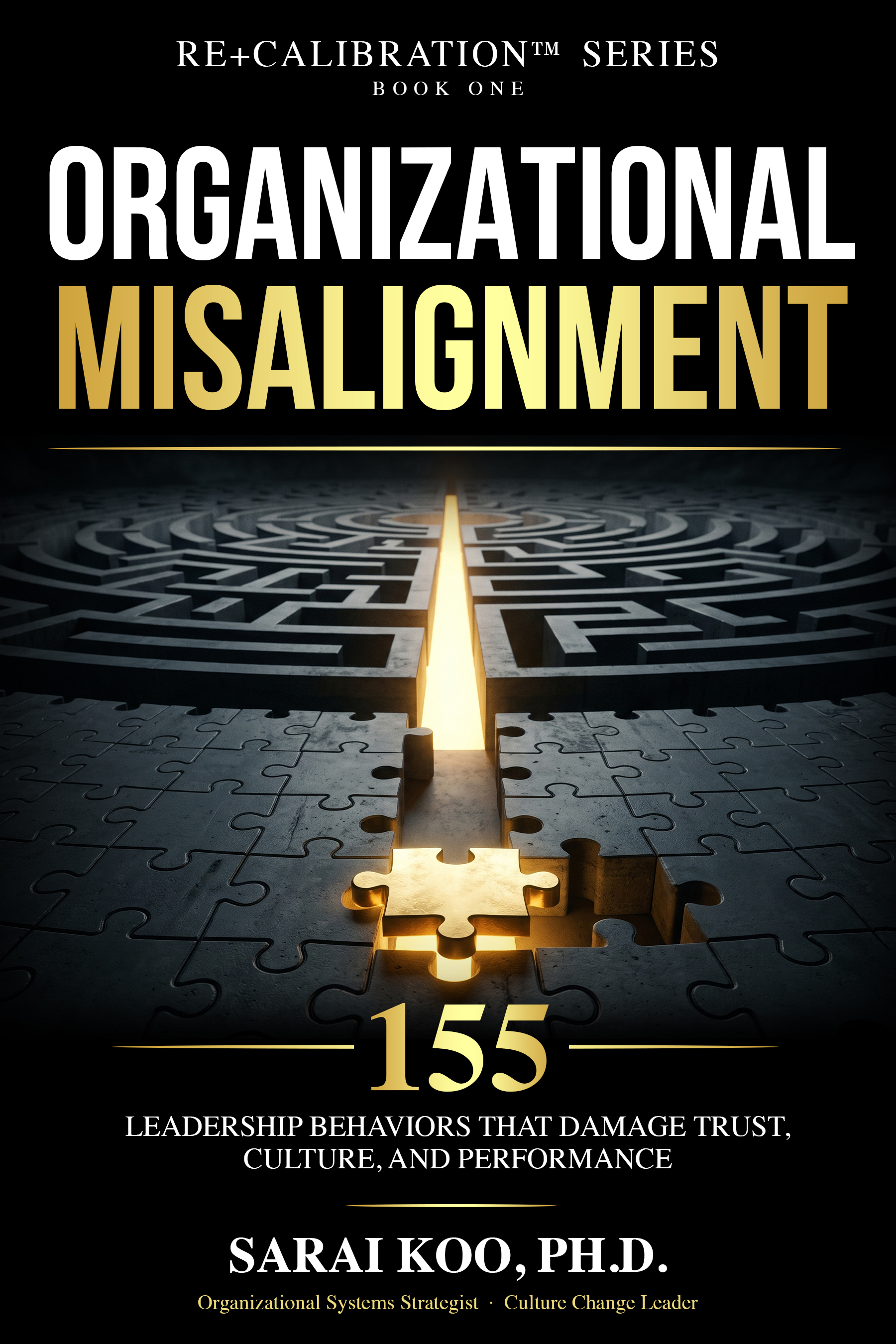
Why capable people, thoughtful strategy, and substantial effort can still produce recurring friction when human and organizational conditions no longer fit.
Explore Organizational Misalignment →
Executive perspectives on organizational complexity, integration, restructuring, leadership systems, decision architecture, and performance under pressure.
Subscribe for Executive Insights →
System-level clarity for leaders
operating in complexity


© 2026 Winning Pathway. All rights reserved.
Privacy Policy | Terms of Service