Too many decisions are returning to the executive level.
Authority, ownership, or accountability may be unclear, causing decisions to escalate upward and consume senior leadership capacity.
Senior leadership pressure is not always an individual capability problem. Sometimes the executive is carrying friction the organizational system should be able to absorb.
Winning Pathway® works with senior executives to clarify decision load, role pressure, leadership relationships, structural friction, accountability, operating expectations, and the organizational conditions affecting executive capacity and performance.
Designed for CEOs, COOs, CHROs, enterprise leaders, transformation executives, and senior leaders operating in complex or high-stakes environments.
Confidential. No obligation. A focused 20–30 minute conversation to understand the pressure and determine whether executive advisory or deeper organizational diagnosis is appropriate.
Executive advisory becomes particularly valuable when strong leaders are repeatedly compensating for organizational conditions that are consuming judgment, time, authority, or leadership capacity.
Authority, ownership, or accountability may be unclear, causing decisions to escalate upward and consume senior leadership capacity.
Strategic leadership becomes harder when coordination, clarification, conflict, or operating friction continuously compete for executive attention.
Persistent friction among executives, functions, or critical stakeholders may reflect unclear roles, competing authority, or system-level misalignment.
The issue may appear to be communication or alignment while the deeper constraint sits in decision architecture, accountability, structure, or operating relationships.
Is the leader the constraint—or is the leader compensating for conditions the organization has not yet corrected?
Executive advisory is tailored to the leader and the organizational system around the role. The work may focus on the executive directly, the leadership relationships around them, or the structural conditions affecting the leader's ability to perform.
Clarify where decisions belong, why they are escalating, and where executive capacity is being unnecessarily consumed.
Examine whether the executive role is carrying unclear boundaries, conflicting expectations, or responsibilities that exceed the operating design.
Address relationship patterns that are affecting trust, coordination, communication, ownership, or enterprise execution.
Identify where strategy, priorities, accountability, decision flow, or organizational interfaces are weakening execution.
Reduce avoidable structural load so executive attention can return to strategic leadership, judgment, and enterprise direction.
Support executives whose roles and leadership systems are being reshaped by organizational change, integration, or increasing complexity.
Executive coaching and executive advisory can both strengthen leadership. The difference is the level of the problem being addressed. The right intervention depends on whether the primary constraint sits within the leader, the organizational system, or the interaction between the two.
Development centered on the individual leader.
Executive coaching is most useful when the primary developmental opportunity sits within the leader—for example, leadership behavior, communication, judgment, mindset, interpersonal effectiveness, decision-making, or professional growth.
The work creates a confidential space for reflection, development, behavioral change, and increased leadership effectiveness without assuming that the organization itself requires structural intervention.
The leader is the primary level at which development or change needs to occur.
Advisory centered on the executive and the organizational system around the role.
Winning Pathway® Executive Advisory examines the leader together with role design, decision rights, leadership relationships, accountability, operating expectations, structural friction, organizational interfaces, and execution.
The objective is to determine whether the executive needs to change, the organizational system needs to change, or both must be realigned so performance can hold without continued executive compensation for structural weakness.
Executive pressure appears connected to how the organization itself is designed, aligned, or operating.
A leader should not be coached to compensate indefinitely for organizational conditions that require structural correction.
In some situations, both forms of support are appropriate. Individual development may strengthen the leader while Winning Pathway® addresses the organizational conditions affecting the role.
Executive advisory is scoped around the leader's operating reality. The objective is not to impose a predetermined development program, but to identify and correct the conditions affecting leadership capacity and performance.
Identify where pressure is showing up across decisions, relationships, role expectations, accountability, leadership capacity, or execution.
Determine which issues belong to the executive, which belong to the organizational system, and where the two are interacting.
Clarify decision rights, role boundaries, leadership relationships, accountability, operating expectations, and other conditions affecting performance.
Strengthen leadership practices and operating conditions so progress holds without requiring the executive to compensate for recurring system friction.
Decisions move at the appropriate level instead of repeatedly returning to senior leadership.
Executives spend less energy compensating for preventable operating friction.
Executive responsibility, role boundaries, and operating expectations become easier to navigate.
Leadership relationships become clearer, more functional, and less dependent on informal repair.
Responsibilities and decisions are easier to locate, reducing ambiguity and repeated intervention.
Leadership direction translates more consistently into coordinated organizational action.
This work is designed for senior leaders whose decisions, relationships, and operating conditions have material consequences for organizational performance.
Leaders navigating enterprise performance, leadership-team alignment, growth, change, or organizational complexity.
Executives responsible for decision flow, execution, operating structure, coordination, and enterprise performance.
Leaders managing the intersection of leadership capacity, organizational design, accountability, culture, and enterprise change.
Executives leading restructuring, integration, large-scale change, mergers, transition, or system-wide transformation.

Winning Pathway® does not assume that recurring executive pressure is primarily a leadership-development issue.
Re+Calibration™ helps identify how leadership behavior and organizational architecture are interacting, allowing advisory work to address both the executive and the conditions affecting the role.
When the deeper constraint sits beyond the individual leader, the engagement can expand into leadership-team or organizational Re+Calibration™ rather than requiring the executive to continue compensating for system-level friction.
Explore the Re+Calibration™ MethodologyWinning Pathway® is connected to ongoing work examining organizational misalignment, integration, leadership pressure, human systems, and performance under complexity.
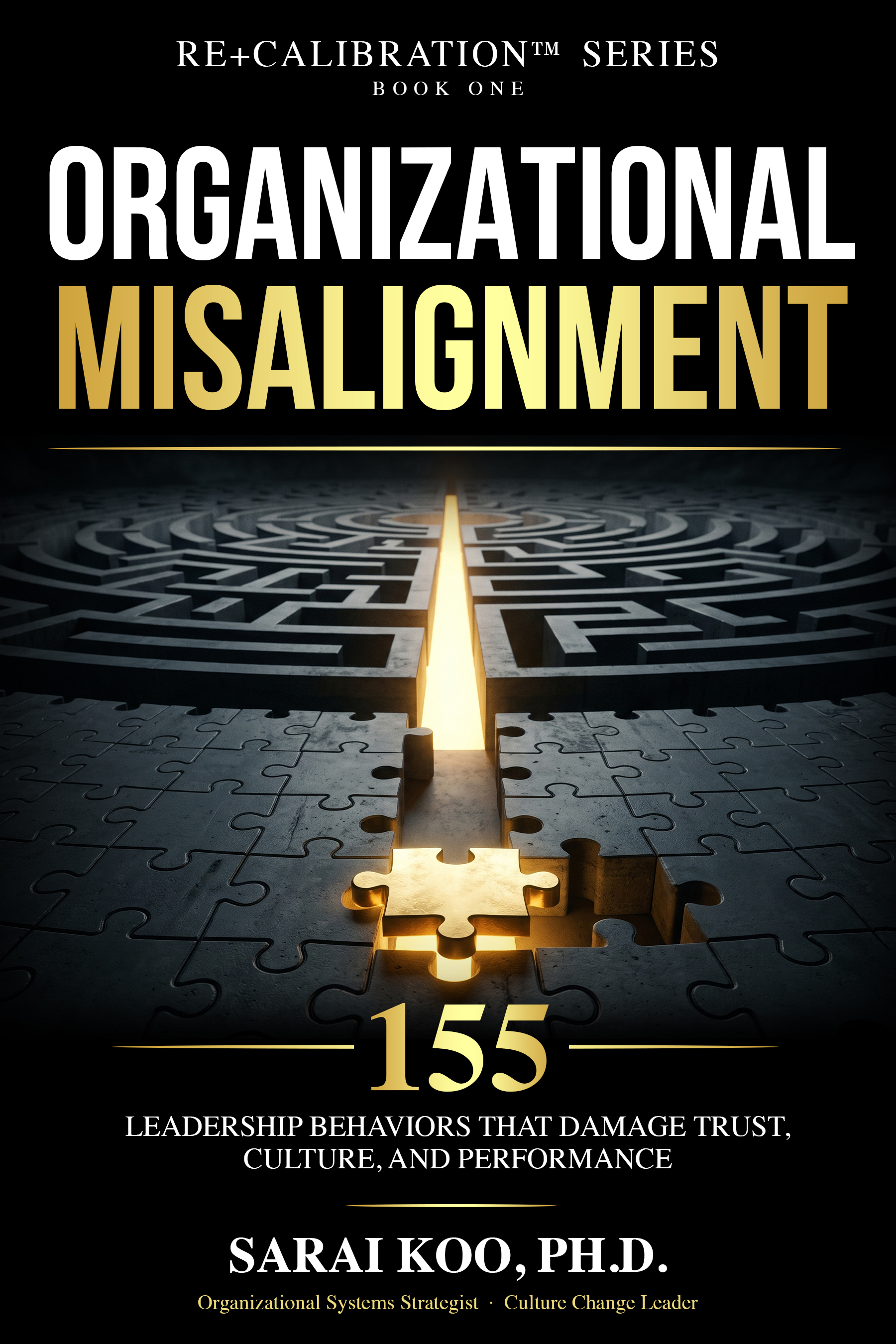
Why capable people, thoughtful strategy, and substantial effort can still produce recurring friction when human and organizational conditions no longer fit.
Explore Organizational Misalignment →
Executive perspectives on organizational complexity, integration, restructuring, leadership systems, decision architecture, and performance under pressure.
Subscribe for Executive Insights →
System-level clarity for leaders
operating in complexity


© 2026 Winning Pathway. All rights reserved.
Privacy Policy | Terms of Service